Queer ‘Two Spirit’ Shamans

Part of my ‘Spiritual Journey’ has been dealing with the word SHAMAN in application to myself. In 2004 I was asked to speak at a weekend conference on BREATHWORK in Milan Italy. I did my slot on Gay Relationships ( the term queer not used then ), in fact I had great problems using the term GAY to a heterosexual Italian crowd, they preferred ‘homosexual’ still believing it was a mental illness – but must push on . . . 

The next speaker, topping the bill, was a spanish woman, who I had met at other conferences, seen as quite unbalanced by this conservative crowd, suddenly asking ME without discussion, fuming at my reception, to assist in her Shamanic feather waving ceremony. I was commanded to hold the feathers!

I was a bit shocked and frankly embarrassed, but then she proceeded to totally demolish listeners by stating ( out of the blue ) I WAS A SHAMAN, an URBAN QUEER SHAMEN, someone who had healed himself from addictions and long held chronic disease. THAT SHUT THEM UP. 

It has taken me 20 years to accept it finally, that my somatic breathwork work is SHAMANIC. It’s a recent conclusion so I’m putting it out there as fact, as I am late to the party with over 35 years experience in assisting others to heal themselves. I am now over 42 years clean & sober too, and a phrase I picked up over the years in recovery rooms is ” you can’t give away what you haven’t got!”. EXPERIENCE is GOLD – with or without feathers.
A “Queer Two Spirit Shaman” refers to a Native American individual who embodies both masculine and feminine spiritual qualities, often taking on a role as a healer or spiritual leader within their community, and whose gender identity falls outside of the Western binary, historically described using the term “berdache” by Europeans, now considered outdated and often offensive; “Two Spirit” is the preferred term used by Indigenous people to describe this identity. 

Key points about this term:

  • “Two Spirit”:This is the contemporary, respectful term used by Indigenous people to describe individuals who embody both masculine and feminine spirits, often associated with special spiritual roles like shamanism. 
  •  
  • “Berdache”:This term, originating from French, was used by European anthropologists to describe Native American people who did not conform to Western gender norms, but is now considered derogatory and should be avoided. 
  •  
  • Shamanistic role:Historically, Two Spirit individuals often held significant spiritual positions within their tribes, acting as healers, visionaries, and ceremonial leaders. 
  •  
  • Queer identity:“Queer” in this context encompasses the non-heteronormative aspects of a Two Spirit person’s gender identity and sexual orientation. 

Having said all that – Coaching, Life Audit and ‘Conscious Connected’  Rebirthing Breathwork that I provide – does NOT include feathers, ceremonies, ‘shrooms, ayahuasca, cacao or any mood altering substance. 

As alternative, Somatic Shamanic Breathwork I practice gets you high, ( like coming up on E – I keep hearing ) spiritually connected with safe emotional release of anxiety, depressions and blocked potentials. No Drumwork or talking sticks either. Specialised Practitioners do that so much better than me.

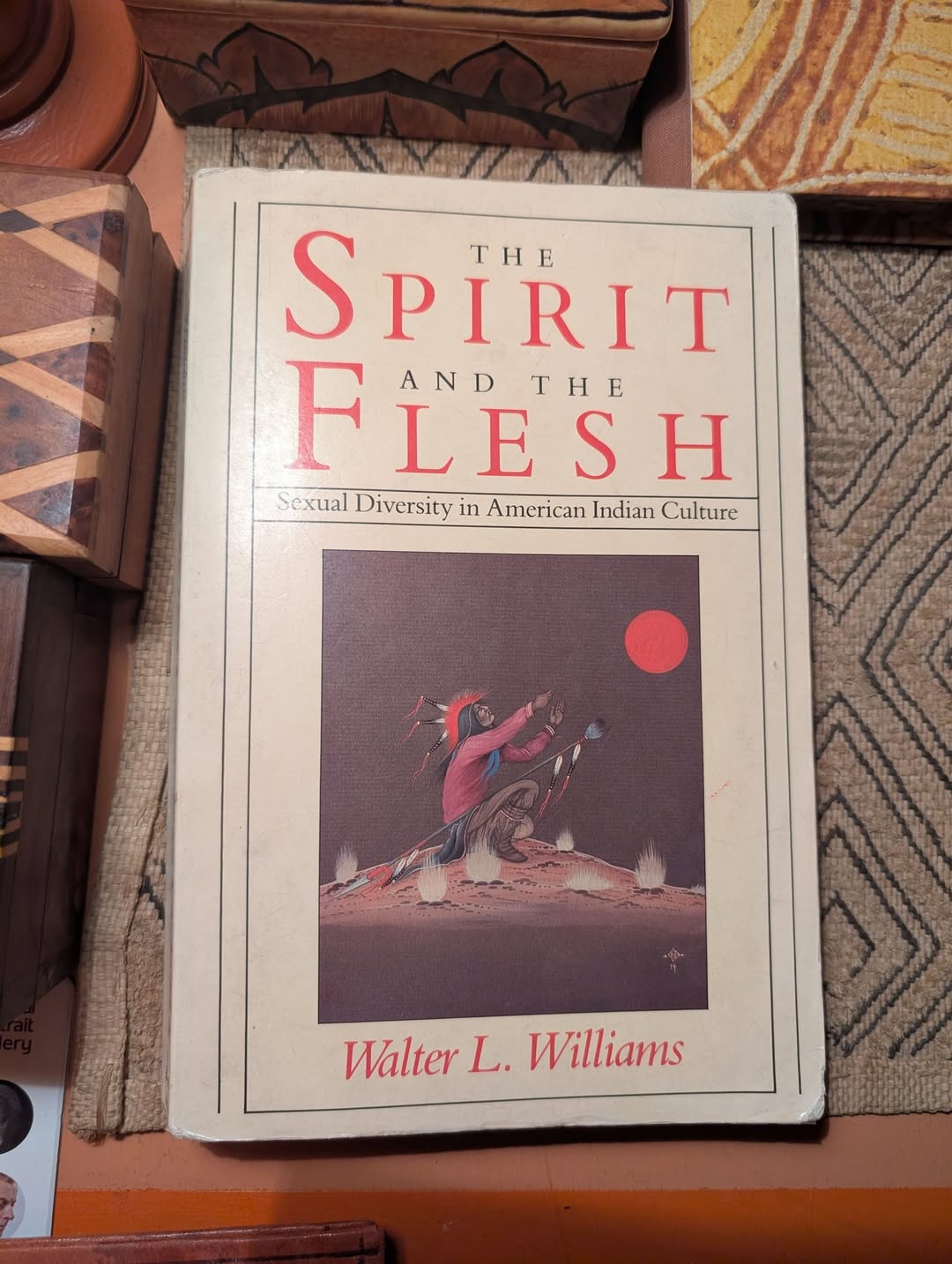
Antony Hegarty, of Antony & the Johnsons is a fan of the book The Spirit and the Flesh. He asked its author, Walter L Williams, to write a feature for guardian.co.uk/music on the ‘two-spirit’ tradition in Native American culture 

https://www.theguardian.com/music/2010/oct/11/two-spirit-people-north-america
What does “Queer” and “Genderqueer” mean?

Although the term “queer” has been around for a while, the perception and meaning has evolved as of late. 

What does “Queer” mean? Why are younger generations reclaiming the word Queer?

What does “Queer” and “Genderqueer” mean?

“Queer” has been adopted as an all-encompassing term for those who do not identify as straight or cisgender, but prefer not to use a more specific term.  With regard to gender identity, the term “gender queer” is synonymous to “not cisgender”. 

Why is the history of the term  “Queer” so significant?

Some feel the term “queer” cannot be its history. The term used to be considered a slur towards gay men or those otherwise “sexually deviant”, stemming from the original definition of “strange”. 

Now, “queer” has become a symbol of defiance and empowerment, and more and more, it is becoming a political statement of their own agency. With its many definitions, “queer” evades exclusivity. Once used as a slur to ostracize, the term is now  reclaimed to bring together a community of people who identify with it. It can also be used interchangeably with “LGBTQ+”, a term sometimes seen as too wordy to use as an overarching identifier.

Why are younger generations reclaiming Queer?

What does it mean for a slur to be reclaimed? 

“Reclamation is a form of socio-political protest that seeks to re-shape oppressive social practices by controlling what can be done with words.” – Popa-Wyatt

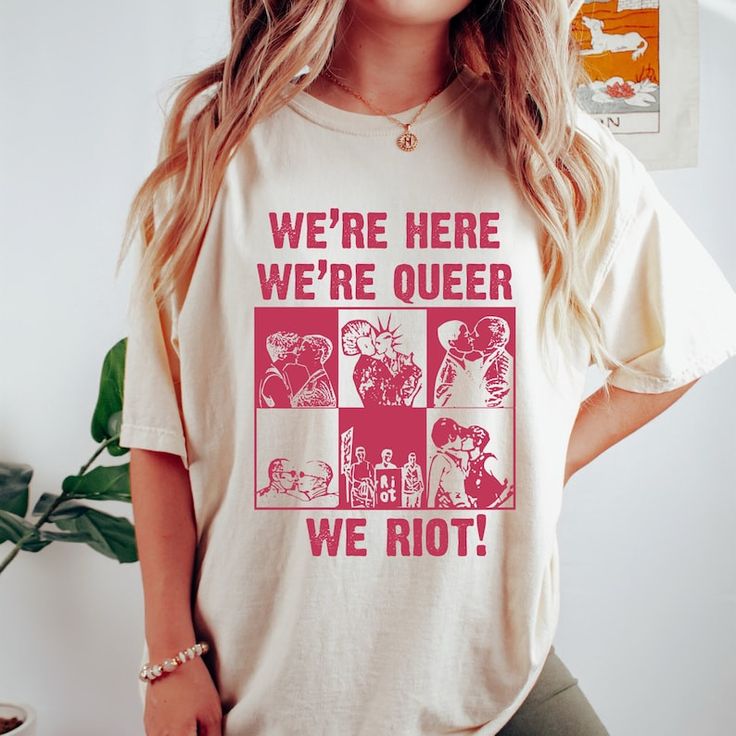
With pithy catchphrases on Pride posters like “We’re here, we’re queer”, the word has been reclaimed by many in the LGBTQ+ community, especially youth. 

Reclamation should not be seen as disregarding the history of the term, but a way of evolving with our language.

Politics of Queer 

“Queer” can be seen a political movement, against its use as a slur and its perception of a stagnant identity. Author José Esteban Muñoz once said,“Queerness is an ideality…we can feel it as the warm illumination of a horizon imbued with potentiality” (Cruising Utopia: The Then and There of Queer Futurity). Queerness is a potential and a future, not something that is stagnant. 

It can also bring together those of different experiences into not one identity, but instead one community defying heteronormativity.  In the book Keywords For Gender and Sexuality Studies, author Chandan Reddy sheds light on political usage of queer. Queer is claimed by “[t]hose who seek more to disturb, shatter, or undermine the heteronormative cultural order than to be included or represented by that culture and order especially claim the term”. 

What Queer brings to the community

For many, the term Queer is a resistance to the pressure to conform or categorize to one identity. Some people might think that this sounds counterintuitive: use a term to not use a term? Queer is often used as an umbrella meant to catch those not aligning with the specificity of many commonly used terms. It resists identifying self, and instead identifies community. This reflection of belonging to community reflects the importance of accepting the multi-faceted nature of a word like queer. 

Queer has become a symbol of defiance: both an acknowledgement of the community’s history, and a nod to disruption of heteronormativity. But ultimately, it has become a symbol of the LGBTQ+ community’s unity and resilience. 

Sources

The New Woman: Literary Modernism, Queer Theory, and the Trans Feminine Allegoryby Emma Heaney

Cruising Utopia: The Then and There of Queer Futurity by José Esteban Muñoz

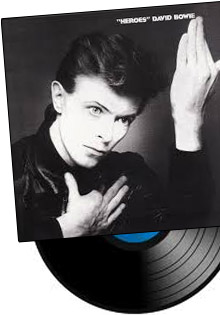
Him-Magazine JULY ‘HEROES’ Issue : We Can Be Heroes, Just For One Day

davidbowie_lifestyle_jul13London, England, is lucky enough this summer to be privy to a major retrospective of Bowie: David Bowie is… the biggest sell-out show in the Victoria & Albert (V&A) Museum’s history! It sold out online for the whole four month run, with Five-Star reviews from the media critics. Tickets were only available in limited slots if you visited the museum on the day, so I was lucky to view my own personal history walking around, remembering coming out, broken relationships, pills and clubbing to Bowie’s tracks. His major anthem always was, and still is for me… Heroes… “We can be Heroes, Just for one day.”

The beginning of the exhibition features a collage of influences surrounding teenage David Jones (later Bowie), including the impact of Yuri Gagarin’s first human journey into Outer Space and the Russian Sputnik floating above the ether. Gagarin must have been a hero to a 14 year-old David as much as anyone else, especially as he wrote “Space Oddity” at age 22 in 1969, creating the fictional “Major Tom” spaceman character that became his signature, his vision and legacy. During the same year, Neil Armstrong was the first human to walk on the moon, while fierce gays and trannies at the Stonewall Inn bar refused to be walked all over by police raid brutality, sowing seeds of the Gay Liberation Movement. Heroes, all of them. Checking out the music, costumes and memorabilia dragged me back to a gay life pre-AIDS, when open hard sexuality was the drug of choice. Clones, tartan shirts, bathhouses and above all — hirsute chunks of men – became as ubiquitous as the Marlboro man.

stonewallheroes_lifestyle_jul13

When it came to therapy work in the 80’s, everything was new; addictions, treatment centers, codependency and empowerment became buzzwords, but you only entered these portals of personal development if you had AIDS or were mentally unbalanced. Looking inward was deemed unnecessary in the UK; that was for Americans and their “shrinks” and “Celebrity Rehab” hadn’t started and we had no idea that the worst was yet to come. Before burn-out, I spent two years on an HIV project working with people holding CD4 counts under 50, mostly under 20, who were just preparing to die.

When you think of the media version of a hero it’s easy to recall a man diving into a pond to rescue a drowning puppy, yet the real heroes of those years were those affected by HIV/AIDS who taught the value of everything, including hope, gratitude, true friendship and dignity. A true gift for those left behind in the darkest of times.

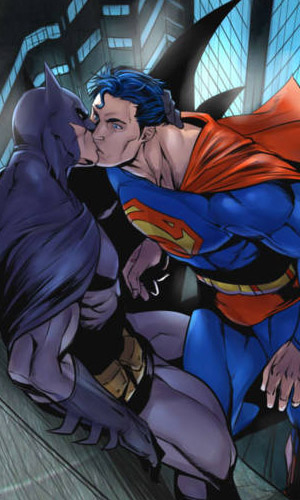
supermanbatman_lifestyle_jul13For many gay men, the most heroic stance is to come out. Therapists refer to the “inner child” as a recovery tool, and the discovery of toxic shame connected to a differing sexuality, family of origin and the impact on adult inter-personal relationships, but I always encourage people to find their own ‘inner hero’ because it’s very easy to pass over, ignore or overlook the courage it took to come out. Heroes Gagarin and Armstrong were trained to float around outer space, yet few teenagers are trained to come out, so it is truly heroic when they do.

The “inner hero” decides inside, awaiting an opportunity to reveal itself, all those occasions when you thought you would’t make it, but you did. When you made changes and took risks, you ultimately won out. Coming to terms with your self and a differing sexuality is as brave as Superman flying across the skies, and not all gay men get off the ground. This is where therapy can assist you to teach the bird to fly.

Bravery is also required when leaving an abusive relationship; when the odds are against you. It takes courage to rescue yourself, instead of waiting for someone to come and rescue you; to be scooped up in Superman’s arms and held safe. Many men wait to be chosen, rather than choosing themselves, awaiting rescue “by a great dark man” as Quentin Crisp put it; either online or in real spaces. This tale of a damsel in distress is an epidemic in the lives of gay men. One plays the victim, the other the fixer.

The victim who has less feels held and safe but inadequate, and fixer gets off on the  control they have due to the codependent nature of the relationship. Eventually, a stalemate is reached and couples counselling is suggested and taken up. It’s at this stage with a counselor as the intervener, that truth begins to unravel, failings honored, observed and owned. Not many couples are brave enough to take this adult route to save themselves. It may look like the therapist is acting as rescuer, but a good one will not be trained to fix clients, but allow clients to fix themselves. When this occurs the “inner hero” unleashes, boundaries begin to be respected and esteem is raised, even if the outcome is not to one partners agenda, but honesty and acceptance is far more heroic than rescuing a puppy.

________________________________________________________

You can read my monthly article here in original form here : http://www.him-magazine.com/2013/07/01/we-can-be-heroes-just-for-one-day/

Queer Happiness

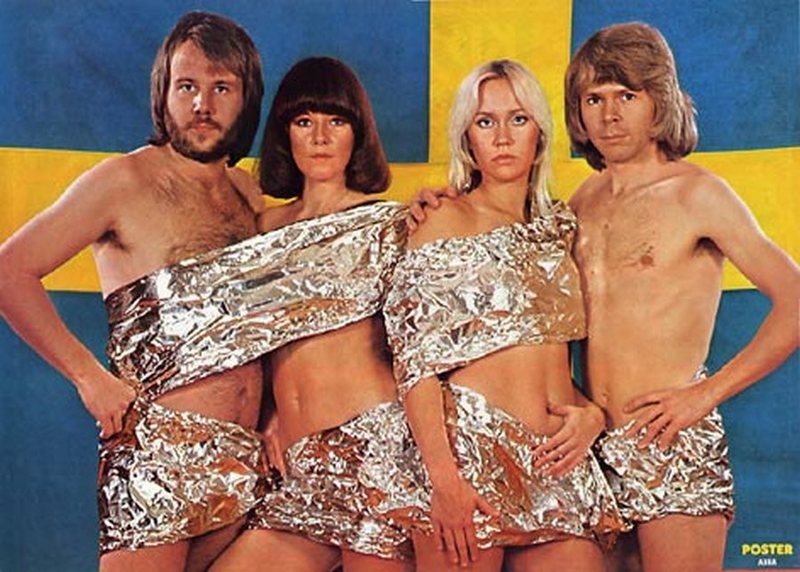
abbatin2” You don’t know the meaning of true happiness until you hear 30,000 Gay Men recognise the opening bars of Dancing Queen “, so wrote a str8 journalist for the London Evening Standard, reporting on the Opening Ceremony of the GAY GAMES in Amsterdam in 1998. You can imagine the rush, the sense of belonging, the HAPPINESS in those brief riff seconds of connection. Clubland, Disco and secret nightclubs have always been our haven. The chance to be ourselves, to be authentic, to be free, to be queerly relaxing with our own kind. Dancing Queen by Abba certainly captured the essence of underground popper sexuality, way before ‘hands in the air’ circuit party chems, became the norm.

Some of us recall the re-emergence of the word ‘Queer’ in mid-AIDS politics in the early 90’s, the snatching back of a mid-twentieth century term of attack. Now post-millennium the word QUEER has a changed yet again into a term embracing all sexualities and genders, indicating alternative, creative and avant grade. I was called ‘a queer’ at school, or an ‘OMO’ so I was queer before ‘gay’ became commonplace and ironically both words mean ‘happy’. One of the things I hear time and time again from gay men is ” I don’t fit in”. They answer to that is ‘you don’t need to, in order to be happy’.
 
 
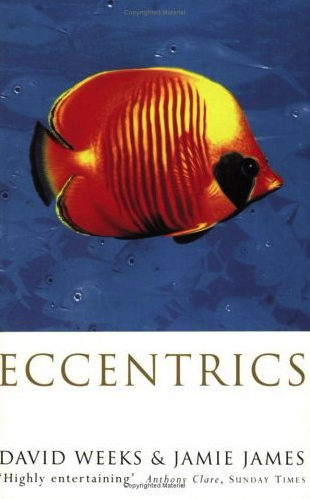
ECCENTRICS
 
 
In the UK, the hot TV programme mid-nineties was ‘Queer as Folk’ a radical, tell it like it is, drama series. In Northern England, they still say ” there’s nowt as queer as folk”, as they did the previous century, because the word queer meant ‘odd, unconventional or eccentric’. At the same time as this trailblazing show, I was knee deep in a new book by Dr David Weeks and Jamie James, the first scientific study of eccentric behaviour called ECCENTRICS. The conclusion of this study was that odd ‘queer’ people were the happiest people on earth because they didn’t care what people thought. No shame, no fitting in and certainly no people-pleasing. We have a lot to learn from them. At the last chapter I switched from seeing my queer sensibility as an asset, not a cross to bear as an outcast. I was particularly taken with Ann Atkin from Devon England who not only had 7,500 gnomes in her garden, but dressed as one on a daily basis. She was as happy as Larry, supermarket shopping with red cheeks and a pointy hat. Good for her! Dr Weeks concluded that eccentrics were nonconforming, creative, idealistic, aware from early childhood that they were different, intelligent, and in possession of a mischievous sense of humour. Well as I ticked all the boxes, I went from queer to eccentric and back to queer, I saw it as the same in the end. Living queer without performance breeds happiness.
 
tumblr_m8q0hmFf1d1rbkz31o1_1280Armed with bravery and my new eccentric weapon of freedom I could be whoever I wanted to be. From that point to now I recognised my eccentricity as vital, my different-ness, and my somewhat rebellious lack of desire to fit in as an asset. Masculine fashions change anyway. The streets of East London particularly, are paved with the ‘new queers’, inked skinny bitches who refuse the mantle of porn masculinity preferring instead the odd, the punk and the scruff. Funny how these guys will be cloned into the norm sooner or later before the next batch of queer look appears. Happiness, and the experience of it, is relative, and as diverse as our LGBTQ community. It is no companion to shame or apology, for accepting who are, results in a happier disposition. Coming out as queer, eccentric, gay, bi or whatever word you use, also means being as brave as Ann Atkin in her pointy hat, in cultures, communities,and churches. It’s a brave but essential road to walk, but remember those liberating queers that walked before you, respectful head held high, learn from that. Gay marriage is not for all, or even being in a relationship for that matter, but real happiness, queer or not  is being content with what you HAVE got, rather than what you haven’t. Truth, authenticity and loving yourself  exactly as you are, is a great boyfriend to be happy with. Do you walk this road?
__________________________________________________________________________
l_84565_a46dca08
 
Checking out queer films I came across this blog of listed queer films, if queer history interests you. At the time of Abba, men cruised the streets, not on-line, and when the concept of AIDS was sci-fi we used instinct, not profiles. I was particularly impressed with his opening quote ” I’m bored and depressed with today’s gay image of marriage, adopted babies and content bourgeoise living. Blandly masculine, domestic and inoffensive is the new gay stereotype and I can’t relate anymore. This list is a tribute to tough queer thugs with switchblades, bisexual hustlers, sissy villains, killer drag queens and true outcasts, films that got me through my years as a sexually confused teen. I’ve also included some (occasionally offensive) homo horror for the hell of it “.


this blog first appeared on my regular RELATIONSHIP GUYD column on http://guyspy.com