Great Expectations

Setting expectations too high is societies curse, which is why government and partners fail us and media is flooded at this time of year with detox trivia, diet plans and resolutions. Don’t encourage them, be stylish – wait till February – or when you feel you want to, rather than need to just because it’s New Year. January is the time for looking back, not unplanned impulsive action. See where you have gone awry first. Take note of Dickens little orphan boy Pip in Great Expectations, “take nothing on it’s looks; take everything on evidence : there’s no better rule”.

It’s a pity that we take many things on first looks often without resort to reality, living a dream. It’s easy to be optimistically romantic in a club then discover 6 weeks later knee deep in “a relationship” that he’s psychotic, a compulsive liar or an addict. It pays to do detail sooner. Although the Pythons insisted that we look on the bright side of life, optimism is another word for denial so best if you face facts quickly, take everything on evidence and move on. Denial is an unconscious defence mechanism, which is why it’s so rampant, and therefore part of our core survival system.

None of us can survive our lives without a certain amount of denial to keep us in balance, but with denial in regards to addiction, the denial is taken to extreme and since gayers have a habit of breaking conventional bounderies, we are more prone to addiction, because we often have no boundary of when to stop and grow up. We don’t want the party, unconscious spending, cruising addiction and the chems to end – but if we don’t take stock, look back over the year, the end will come sooner than expected.

Why do people deny they need help? There are many reasons for denial in addiction. One reason is that most users don’t like to feel helpless and out of control and ironically, to observers, this is exactly what addicts are portraying. Bob Mandel of the Loving Relationship Training said ” the only guru you need are the results in your life “, but any addict or compulsive user often refuses to face facts, relying instead on the expectation that it will all end with a wave of a magic wand. It won’t. The addict will blame everything and everyone except their own substance abuse for their problems.  One of the reason why chems are the lifeboat of the scene is that the chemical dependent may be using drugs or alcohol to cover up numb or unpleasant feelings and by stripping away the denial, the unpleasant feelings will come to the surface. That’s why fear of detox keeps the compulsive user using. The last few weeks will have sorted the men from the boys, top this with office parties and extra socialising in December it’s no wonder we crave a detox, a rest or show the white flag for the New Year. It’s expected now that we slow down and the majority will, but many will be living with a nightmare partner, flatmate or family member with the party still in full swing. If you are – seek help. You may not help the addict but you can stop yourself getting drawn into manipulated guilts, codependency and the false expectation they will wake up and come out of their coma of justification.

While not all substance abusers have suffered past traumas in their lives, an inordinate amount have. Child, sexual & physical abuse is common in the addicted population. For gayers add secrets, withheld emotions, homophobia and shame to the mix. But, no matter what the cause is of the denial, the important part is that the addict ( or anyone close to the addictive person ) confront the defense mechanism head on. This may be by what some addicts describe as “hitting bottom” , job loss, health scare or can come from confrontation with family, friends or through the court systems for possession or drunk driving.

Many times an addict will lose a job, friends or family relationships because of the addiction but still find enablers to supply. Denial in addiction is not a linear course, either. The addict may be in denial at some times, and facing reality at others, so addiction in denial may be fluid especially in the beginning stages of looking at themselves or in recovery. Even for those who are far along the recovery path, falling off the wagon and denial can strike at any time and will need to be overcome once again to get back on track. Linkin Park talked about confronting denial best in their song “Breaking the Habit” when they said, “I’ll paint it on the walls, ’cause I’m the one at fault” in acknowledgement that a habit is indeed a personal disease for which one needs to take responsibility in order to break free.
More people consider REHAB in January than at any other time of year but the real test of whether you are in an addictive compulsive spiral is to stop and see how far you get without your poison be it alcohol, chems, escorts, food, internet or procrastination. Expect nothing and allow yourself to feel anything, even a feeling of surrender and freedom. Bare in mind that there are more compulsive dependents than addicts, but addiction will always grab you by the balls when it goes unobserved – as any crack head or meth abuser will confirm. Best if you observe now, take stock, tell the truth to someone and seek help in the areas that control you.

It’s not about stopping the party it’s about knowing when to leave. Look at your life, check the evidence, own it and then decide what needs changing. Don’t expect someone else to do it for you.

Contact me for specialised 3 hour Coaching Sessions or other support services can be found at http://www.theswarmite.com/urban-addictions  Alcoholics Anonymous and Narcotics Anonymous have regular LGBT meetings in London – check Google for information.

Antidote in London is a free LGBT Drug & Alcohol advisory service : http://www.antidote-lgbt.com/howwecanhelp.htm
Fire in the house

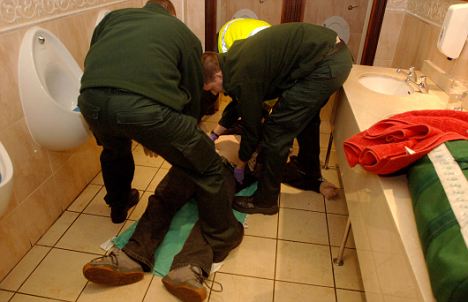
There has been in the words of Mrs Merton, ‘a heated debate” going on, on a London based clubbing website* about police raids, arrests and licensing reviews at certain clubs.  Most comments on the site agree that ‘Vauxhall village’ now represents a field hospital with music, and on top of this, Mr Plod has gone in as a mystery shopper and shopped the dealers, so anyone now entering these clubs better have clean pants on, because security gloves now scan for hidden property in intimate areas. For years the gay club scene has changed course, in style, demand and direction, mostly going East. Smaller clubs, neatly defined, individual and bold, pop up like toast in Shoreditch and Bethnal Green while Vauxhall trades on it’s past glories. Going home in a flashing blue light ‘Vauxhall taxi’, via St Thomas’s, is the G Heads accolade of a good night out, but the drug and it’s chronic users are destroying the club experience for many casual observers.

Some years back a campaign appeared in the gay media about G – KEEP G OUT OF OUR CLUBS – having seen the damage done in San Francisco & Sydney, in closing gay clubs in those cities with G abuse by Police and Institutions. Feared up by loss of revenue, London promoters left their knives at the door to come together in unity, but as austerity cuts bit into club profits I guess blind eyes to behaviour increased and the larger clubs had more to lose which is why clubs are no longer solely gay, more straight friendly to rack up the dosh. Nothing wrong with gay friendly straights, not all straights are, and in my experience homophobic straight women are on the increase. No wonder we still need to create our own safe family networks, in or out of a club. The general rub of the “heated debate” is that serial drug use has overtaken glowstick happiness, and as one poster said ” Fire & Area are linked to drugs like a horse and carriage, you don’t go from Thursday to Monday on a Red Bull & aspirin “. The Alcohol Licensing Bill of 1875 was brought in to curb the notorious gin palaces of the day and social disorder that stemmed from them. During the First World War licensing hours were introduced on command of the military, who did not want pissed soldiers with a gun in their hand. Since millennium licensing has been relaxed and like kids without reins, we have taken advantage of “continental” style habits, quite forgetting that Brits don’t drink booze from a thimble like the French, we are natural guzzlers of anything liquid in a large glass. Beer has been historically more available than tea, so call it genetic and cultural usage. Many clubbers in the 90’s dropped booze as a drug of choice and choose a pharmaceutical route, but that old genetic link remained and its underling addictive quality. Even overseas visitors says they are blown away by London club consumption of chemicals and alcohol, alarmed and feeling ostracised by behaviour.

Many commentators on the ‘debate’ website refer to the subject of personal responsibility by promoters, landlords and clientele. This is all very well coming from a comfy armchair or people who have bought £2 Million Penthouses close to the clubs in question, watching wandering wastrels scour the landscape 24/7, but the nature of the beast defies logic. Addiction in any form has been described as “the illness that tells you you haven’t got it” and the wake up call is often ignored by gathering colluders to keep the game in motion. At some point in our lives we need to check in and curb behaviour, and gay clubs should be no different. Sadly, it can take a Licensing Review, to stare reality in the face, the same as an individual losing a job, relationship or good health through using and abusing, and addiction to profit is no different. I am told that most clubs employ good medics, but I suspect that this out of fear, loss of licence, rather than respecting clientele. Remember how long it took to get tap water in clubs when E ruled the roost. It took a death to implement change. Some people wonder why clubbers refuse to take personal responsibility for themselves and others. The answer is that habits, compulsions and serial addictive behaviour are beyond intelligence. The Word Health Organisation defines addiction as an illness, not self inflicted. Some wake up and move on after a period of heavy usage, while other stay stuck on a hamsters wheel, convinced that all is well. Just ask a partner of an alcohol or drug abuser. A rock bottom is as long as you can stretch it out before it’s too late to recover, when health overrides hands in the air. In fact hands in the air, is all close friends, co-workers, family and partners can muster in frustration at blind delusion.

You may need to curb and review your own clubbing activities, lost phones, unsafe sex and drug intake at some point, remember you don’t need a rock bottom drama to change tack. A good night’s sleep, nature’s botox, and a friend to share concerns with is a good start, before searching further help. Not every user becomes an addict but heavy using can get you nowhere fast, just walking through treacle and staying stuck.

http://www.discodamaged.com/2011/08/fire-and-area-targeted-by-local-action-teams-whos-next.html

Junkie Living & Dying

Amy dead at 27, the papers have been full of it, but is she any different from a G overdose at Fire or a middle aged gayer on a crack pipe?

It’s easy to sneer at scuzzy street junkies, scuttling off for their next drop while gayers fix themselves up in A&F Muscle Fit, a bump, a line and serial sex. This observation illustrates how we all have a scale of snobbery when it comes to junkie behavior. Someone else is always a benchmark for addiction. If someone is talented like Amy it seems wrong to cuss but if a junkie makes home under a cash machine on the street it’s easy to sound off, look down and snear.

Bears often add to their profiles ‘No druggies’ while they sup 10 pints of Newcastle Brown a night without heeding that alcohol is the oldest known drug. When I was bang at it, junkies were smack-heads, horse dealers, scat boys, skaggies or simply “on the brown”. The lowest of the low after meth drinkers. Now heroin addicts are almost respectable living on benefits, methadone and 6 packs of Special Brew. What a turnaround, well at least it helps the crime figures. Thankfully most gay men don’t go round snatching bags and mainlining in parks but in some quarters gayers at home on the crack pipe is the new hubble bubble of fashion.

Glamorous addiction never lasts, the cheeks soon turn pale. It’s easy to think that gay men just do ‘hands in the air’ club drugs, that they never have to resort to dogs on string, but the reality is that many are out there using to oblivion, nicking to survive, just like a street junkie. Stealing from banks by maxing a credit card and moving on with no forwarding address is no different, the courts would say. We are all junkies on some level but the extra luggage of shame and low esteem that homos bring to the table reflect the present day consumption of goodies that we use to escape fearful feelings, realities of life and viral intervention. Don’t ask, don’t tell. Look where SILENCE has led us – the world of illusions.
The illusion that tight tops and big Muscle Bears are somehow different from the manic street junkie is an epidemic of denial. Whether you score from a phone box or have it delivered by Addison Lee is off no consequence when you use a drug every day. Daily drugs users are not always addicts but they are junkies. Using dry cleaning fluid as a stabilizer is junk. Drug and alcohol dependency is so insidious that no one knows where the magic line is that gets you hooked.
I have seen drug fucks use for 10 years and be able to cut back or cut out within a week while others become addicted to a drug of choice within weeks and can’t stop (and never stop till they OD). Most gayers sit in the middle of social using and heavy using without becoming addicts, but heavy using can still destroy what’s left of your relationships, bank accounts and sanity. Rehabs will tell you that you don’t have to hit bottom with a habit, you can get off at the 2nd Floor, so wise up while you can, the body will only take so much.Think how many times you have gone out without a drink or drug inside you. When was the last time? When did you last have sex without stimulants? ( . . and I’m not talking Viagra). When was the last time you pigged out on comfort food and went on a binge? The propensity for JUNK is everywhere and our lifestyle of no dependents can lead us to junkie thinking of instant gratification, I want, I must have, I WILL have – the illness of self obsession. Tempering our needs and knocking out the wants leads to balanced thinking, balanced lives and less emotional comedowns – which some of you may desire but have no idea about obtaining.
Amy had help thrown at her from all directions but the illness of addiction, blocked her ears. Addiction is not choosy, it hits up the super sexy and the mundane and it’s the illness that tells you you haven’t got it. Recovery starts with ownership, awareness and surrender.
Focus this week on your own junkie behavior, it’s easy to knock someone else’s (especially a partner), try recognizing where you relapse into junkie thinking, acting out and progressive denial. Then consider a game plan for reversal toward more conscious using, for as I’ve said many times before, chems are not the problem, the problem lies in the vessel that consumes them. It’s not what you take, it’s how chems make you feel, and at some point the romance ends and you flat line into oblivion.
Living with a partner with a habit is exhausting, even more so if you join them. They may not die in body but the brain and spirit is gone, taking logic and time with them. It’s easy to think you can help, assist or fix someone, you can’t. Amy is an example of this, for until the junkie shows the white flag the battle sadly continues for all, until death.
Sadly I doubt whether Amy’s death will allow LGBT users to think twice about their own using habits, since using Amy as a benchmark for what ‘real’ addiction is, is a game well played. It’s easy to blame fame as a co-conspirator, or talents beyond management, when the reality is we all believe this stuff happens to other people, not us.

Drowning in Booze?

For most gay men on the lash, the thought of abstaining from booze fills them with horror, even if their present lifestyle is horrific in chaotic content, to the outside observer. Judgement never worked for me when I was bang at it, so don’t expect it in sessions. However it’s wise at some point to judge your own behaviours with experienced guidance.

When a client has an alcohol dependency, they usually “do too, too much” on a regular basis, which doesn’t always mean they are alcoholic. Although I have been clean & sober since the early eighties via 12 Step programmes I don’t use this material in my work, they can go to meetings if they want to pursue this path and abstain, a day at a time.

One of my clients was asked by ATTITUDE MAGAZINE to write his experience of getting off booze for the September 2010 “ISSUES” Issue, a dedicated spread of 12 pages around addictive & compulsive behaviours that affect gay men.

KEITH, 42, Project Manager, London.

” When I stopped drinking in September 2007, having been an alcoholic all my adult life, people started to ask : ” How did you know you were addicted?” It’s a difficult question to answer as everyone is different, but a good indicator is when any addiction you have starts costing you more than money. My illness, or to put it another way, my inability to cope with alcohol, was responsible for me fucking up in every job I ever had. I maxed out credit cards, had no sense of perspective and my life was a heady mix of addictions and chaotic living.

Most recovering addicts will agree that you have to reach rock-bottom in order to wake up from the coma ( of alcohol, and in my case drug dependency as well ) and it was for me although, unlike many others, I’ve never entered any treatment rehab or attended AA/NA meetings as yet, to pursue recovery.

I’d been on the lash in the Two Brewers one night. I couldn’t remember getting home and when I woke in the morning, I called work and concocted some spurious excuse for me not being able to come in. Maybe I’d had enough as my excuse was flimsy, see-through and fooled no-one. All the years of having to build lies to cover up my using ( which everyone saw through at once – the only person who believed the lie was me ) had taken their toll. Another job was hanging in the balance so I decided that I was too tired to carry on living this way and did something about it. I picked up the phone and called David Parker, as he had come recommended and was known as ‘Clublands Therapist ‘ on the scene.

We started working together in October 2006 and I set out on a path of  “purposeful using” as David calls it, which in a nutshell means using ( alcohol & coke ) on special occasions only. This was for me to decide my level of dependency. There were hits and misses, and in this first year I didn’t define myself as alcoholic, but there was plenty to unravel as the alcohol had been masking a whole raft of issues, including co-dependency, and low self-esteem. It was only after a year in therapy that I admitted to myself and everyone that I knew that I was alcoholic, and in many ways it was a relief to label myself as such, as it was proof that I was unable to deal with alcohol and would never be able to safely drink again.

It would be a lie to say that I haven’t been tempted but given where I am now compared to three years ago, going back simply isn’t an option. The vast majority of my friends have been wholly supportive of me. True, there have been one or two who resented me getting well but I guess that’s bound to happen. It’s one thing getting sober but the real test is staying that way, so I observe my thoughts and actions on a daily basis. I’ve been sober and off drugs for almost 3 years and there will ( I hope ) be many more ahead for me. The key to success is remembering what made me drink and how it made me feel so I’m not tempted to pick up a drink again – in 5, 10, 15 or 20 years time. “

http://www.attitude.co.uk/

As my client discovered, being coached into booze solutions leads to other areas of opportunity and improvement. In the timespan I worked with him he also stopped smoking ( and has stayed stopped ), gained emotional esteem, lost weight, created a regular gym regime, dealt with debt and is now in surplus, started dating again, gained career growth and started his own business. What’s not to like?

Sacrifice

Before chems became the main course and not the starter, GAY MEN’S HEALTH was all about not catching the lurgee, the gay plague bestowed upon us by an unknown force and according to Donna Summer in the ’80’s, it was the Lord himself shouting down from above – no more bum fun for you lot. Sacrifice your pleasures. While we are on the subject of anal temptation, ask any straight boy how they like it and it’s up the botty every time. Not their own of course, that’s for late night net chat fantasies, no it’s how they like to feel the force with a lady, so it’s not just prime homo territory as people assume. In the 1930’s anal penetration was grounds for hetero divorce in the courts and I gather was more popular than adultery when it came to sealing the deal.

You would think by the amount of HIV related material rammed down our throats for over 20 years, that it’s the only disease we suffer from. All government funding around HIV/AIDS began to dry up in the mid-nineties from the HIV pot when combos came in in 1996, it was combos or support services, not both, so fundees hunted around and found excess cash in the Mental Health budget to continue filling the AIDS industry coffers. PACE popped up, other agencies appeared but still the main focus remains HIV/AIDS. Even PACE’s strapline still says . . . sex, relationships & HIV. This serves to collude with the notion that HIV is the main issue for gayers when in fact (as any prison or hospital will tell you) alcohol and drug abuse is the REAL issue for individuals. So in order to serve the PC world of funding, we put the cart before the horse. No one dare speak of the elephant in the room, the love that dare not speak it’s name: we take too many drugs.

The amount of gay addicts around is very small compared to a majority who know they do “too much”, and it’s this grouping that maybe needs to consider a more purposeful approach to getting trashed.

No one wants to stop the party – just leave earlier, it’s an easy sacrifice to make. Many Doctors remain frustrated that recreational drug use is compromising the work of combos, that gay mental health is only brought up when a G overdose is mentioned, that Hep C amongst gay men is rising fast within those with positive status. Places like PACE can attract those already interested in the healing process, and it’s good that they exist but that big majority who do “too much” would rather eat a snakes cock that present themselves at those hallowed doors, or enter a support group.  If this was not true, PACE would not need a big ad budget to promote and sign people up for FREE workshops – the queue would already be there.

The reality is that groups are just not AD FAB enough, nor is the concept of self observation of any kind. The scene is being dominated by induced emotions via chems, unsafe sex is being acted out via alcohol, dry cleaning fluid, horse tranquilliser and home made meth factories : not really what Oscar Wilde had in mind is it?. Doesn’t it make sense to reduce the stuff we put in our bodies before we stuff someones brain out?

Just because I haven’t used chems or alcohol since the early ’80’s, does not delete me from debate. In order to stay alive I needed to sacrifice, let go, wake up and create my own place in the gay arena without chemical support.

It was hard at first, living with Chronic Active Hep B, a virus 100 times more infectious than HIV, as an unknown supercarrier infecting other gay men for 12 years without any symptoms myself. When I finally stopped using and drinking, my cirrhosis scarred liver worsened into liver failure again and again. My eventual recovery without medication of any kind, plus a lot of personal development and breathwork therapy, released the Hep B virus in 1996 from my body, the same year combos arrived for those suffering with the impact of the HIV virus.

So I know it’s possible to change lifestyle, thought patterns and habits.

The keyword is SACRIFICE. Now I know that sounds a bit religious but the truth is that if we reduced our intake of chems, became consciously responsible enough to wear condoms and drank less, the HIV figures would tumble. Yet the services available and the funding required for drug & alcohol support agencies, especially gay ones, is a piss in the ocean compared to the HIV gravy train.

The cart before the horse is not going to win the race. No one is suggesting stopping the booze or avoiding coke but jesus, look at yourselves. Without checking out yourself and taking action, denial will remain a constant companion and its a difficult friend to drop, but without the concept of sacrifice we will not survive the turmoil. The credit crunch has woken us up to debt and if banks carry out the threat of hiking up the minimum payment for credit cards then many gayers are going to have to change address, gone away, address not known.

If each gayer reduced intake of substances, relationships would change, depression and comedowns would be lessened and people could stand a chance of finding themselves again. I can’t safely use again, I crossed that magic line into addiction, but you can check out your habits and reduce party pleasure before the future need to checkin to a rehab. It just takes a little sacrifice on your part, a little practice each day to create a big result. Start making a list now of where to begin this worthwhile journey of consciousness and personal responsibility.