Drowning in Booze?

For most gay men on the lash, the thought of abstaining from booze fills them with horror, even if their present lifestyle is horrific in chaotic content, to the outside observer. Judgement never worked for me when I was bang at it, so don’t expect it in sessions. However it’s wise at some point to judge your own behaviours with experienced guidance.

When a client has an alcohol dependency, they usually “do too, too much” on a regular basis, which doesn’t always mean they are alcoholic. Although I have been clean & sober since the early eighties via 12 Step programmes I don’t use this material in my work, they can go to meetings if they want to pursue this path and abstain, a day at a time.

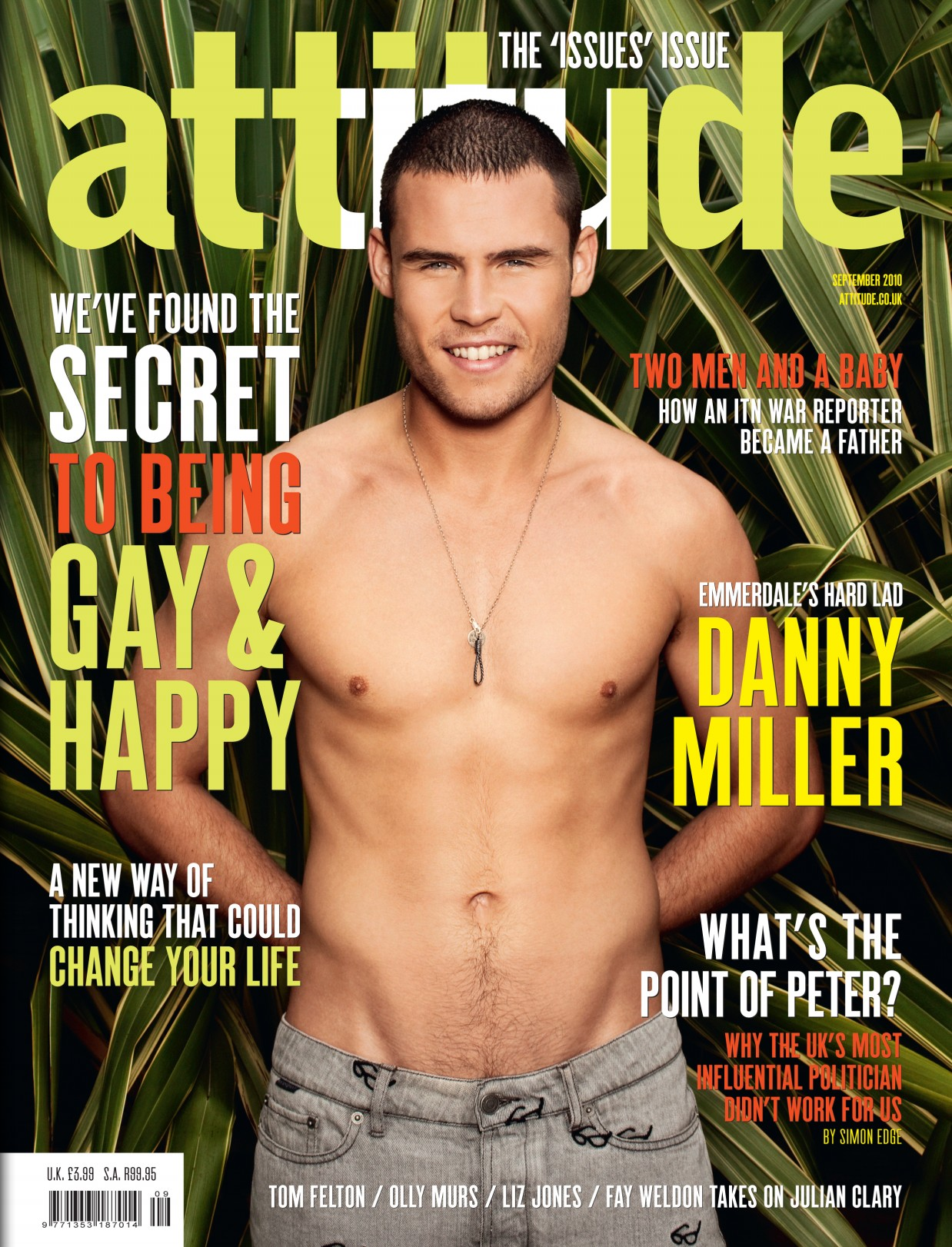
One of my clients was asked by ATTITUDE MAGAZINE to write his experience of getting off booze for the September 2010 “ISSUES” Issue, a dedicated spread of 12 pages around addictive & compulsive behaviours that affect gay men.

KEITH, 42, Project Manager, London.

” When I stopped drinking in September 2007, having been an alcoholic all my adult life, people started to ask : ” How did you know you were addicted?” It’s a difficult question to answer as everyone is different, but a good indicator is when any addiction you have starts costing you more than money. My illness, or to put it another way, my inability to cope with alcohol, was responsible for me fucking up in every job I ever had. I maxed out credit cards, had no sense of perspective and my life was a heady mix of addictions and chaotic living.

Most recovering addicts will agree that you have to reach rock-bottom in order to wake up from the coma ( of alcohol, and in my case drug dependency as well ) and it was for me although, unlike many others, I’ve never entered any treatment rehab or attended AA/NA meetings as yet, to pursue recovery.

I’d been on the lash in the Two Brewers one night. I couldn’t remember getting home and when I woke in the morning, I called work and concocted some spurious excuse for me not being able to come in. Maybe I’d had enough as my excuse was flimsy, see-through and fooled no-one. All the years of having to build lies to cover up my using ( which everyone saw through at once – the only person who believed the lie was me ) had taken their toll. Another job was hanging in the balance so I decided that I was too tired to carry on living this way and did something about it. I picked up the phone and called David Parker, as he had come recommended and was known as ‘Clublands Therapist ‘ on the scene.

We started working together in October 2006 and I set out on a path of  “purposeful using” as David calls it, which in a nutshell means using ( alcohol & coke ) on special occasions only. This was for me to decide my level of dependency. There were hits and misses, and in this first year I didn’t define myself as alcoholic, but there was plenty to unravel as the alcohol had been masking a whole raft of issues, including co-dependency, and low self-esteem. It was only after a year in therapy that I admitted to myself and everyone that I knew that I was alcoholic, and in many ways it was a relief to label myself as such, as it was proof that I was unable to deal with alcohol and would never be able to safely drink again.

It would be a lie to say that I haven’t been tempted but given where I am now compared to three years ago, going back simply isn’t an option. The vast majority of my friends have been wholly supportive of me. True, there have been one or two who resented me getting well but I guess that’s bound to happen. It’s one thing getting sober but the real test is staying that way, so I observe my thoughts and actions on a daily basis. I’ve been sober and off drugs for almost 3 years and there will ( I hope ) be many more ahead for me. The key to success is remembering what made me drink and how it made me feel so I’m not tempted to pick up a drink again – in 5, 10, 15 or 20 years time. “

http://www.attitude.co.uk/

As my client discovered, being coached into booze solutions leads to other areas of opportunity and improvement. In the timespan I worked with him he also stopped smoking ( and has stayed stopped ), gained emotional esteem, lost weight, created a regular gym regime, dealt with debt and is now in surplus, started dating again, gained career growth and started his own business. What’s not to like?

Living in balance

It’s ironic that most of us choose or have chosen a stimulant to balance us ; booze, gear, puff or nicotine for example, at first it works then it starts to get out of hand, it gets too much and then we are hooked into being taken hostage, kidnapped until we set ourselves free. Recognizing that we are not the most important person on the planet is a beginning in unfurling the freedom flag. Freedom comes from standing back and making informed choices rather than letting the ego run amok. It’s easy to think we are missing something if we don’t join in. Many people don’t possess a mobile phone, an ipod or have access to a computer, and more than survive. Many have learnt that it takes courage to be with yourself, to sometimes dispense with the demands of others or living the “gay lifestyle” whatever that means. In other words, it’s OK not to fit in.
” There’s just too much – too much to learn, too much to see, too much information, too much technology, too many techniques, too many ways to pleasure, too many ways to pain. Too much! How can we be expected to take it all in and deal with it? Perhaps we don’t have to take it all in OR deal with it. What a relief to know that we can go deeper and deeper into whatever we wish, and through that exploration come to understand the everything. Since all of creation is a whole and the oneness of all creation is a reality, our world is indeed a holo-movement or hologram. In exploring the depths of one thing, we gain wisdom about others. Our task, then, is to see what calls to us, what piques our imagination, what stimulates our being and asks us to delve deeper and deeper into it. When we follow this calling, we will find balance. “

These wise words of Anne Wilson Schaef remind me that my current intuition has value. When I was bang at it, using chems every day, I thought that spontaneous thinking and acting out was intuition. What I discovered with therapy was that I was addicted to imbalance and that this spontaneous acting out was unhealthy, unfounded in wisdom, and detrimental to my health. Basically I couldn’t trust myself and conned myself that I could. Most of us come into a recovery space, therapy or personal growth to find balance but the moment we start searching the net, self help books or lists of therapies we can easily become overwhelmed with too much knowledge or choices. Best if we leave it another day then.

Delving deeper into yourself, to check where you harbour imbalance takes investment. It’s not cheap to hire a therapist, coach or counselor but then we cheapen ourselves by NOT delving deeper into what makes us tick, continue to hold resentment or end up with lost weekends, mobile phones and dignity. Think of all the ways you hide from your true self by getting trashed, buying clothes you don’t need with credit cards you have no idea what you owe, using coke to get the party started and deceptions that linger within your soul. All this costs time and money.
Taking the risk to dig deep into your patterning and re-balance your mind proves to be a wiser way to deplete your bank account and create balanced living. Anne Wilson Schaef continues ” In exploring the depths of one thing, we gain wisdom about others. ” What most of us find in therapy or coaching is that we are quite mad. When we get clearer about our own madness we see that the world is madder than first thought. No wonder Antony Newley sang ” Stop the World – I want to get off “. But the result of any therapy is to decide which world we want to live in so ask yourself that question, take stock and seek balance. What perception of the world ” out there ” do you have “. It is after all only a mirror image of your inner world view. Think sanely in balance and the world will change around you.

Empowerment

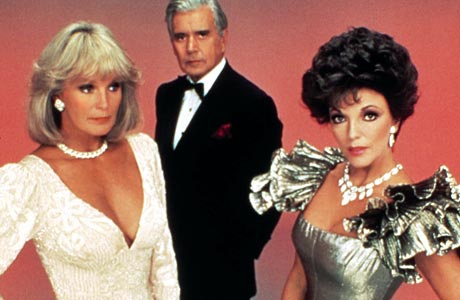
In the ’80’s Empowerment was bigger than big hair, and our Joanie as Alexis Carrington led the way. Big hair, big power shoulders and big drama on Dynasty had us hooked and at the same time our m8s were going down like flies to AIDS so the buzz word was EMPOWERMENT. At this time I was undergoing my own drama’s – recovering from active addiction, personal bankruptcy, cirrhosis of the liver plus living and dying with chronic active Hepatitis B Virus that had no cure. This is how I came to empower myself.

Every AIDS movie had to have 2 props, one was a token screaming queen and the other a copy of Louise L. Hay’s YOU CAN HEAL YOUR LIFE on the bedside cabinet. If you don’t believe me watch Philadelphia, the 1993 Tom Hanks movie.

When the book was published in 1984 she began creating and leading support groups for people living with HIV/ AIDS – she called these ” Hay Rides ” – for around 300 gay men who were told they were about to die. I got sent the book in 1984 from a friend in San Diego along with an AIDS tape with a guided meditation which I used every night for 3 years. By 1990 I hit the big 50 mark of people I knew who had died of AIDS, many gay recovering addicts and alcoholics with immune systems too weak to withstand longevity, then I stopped counting cases and going to funerals. Between 1994 -96 I worked with people who had a CD4 count under 10 and many in single figures. I assisted those dying in completing this lifetime but many are still alive today with combos, but combos are not empowering unless you HEAL YOUR LIFE alongside it – habits will return unless observed with intent for change.

During the 80’s you only had therapy if you had AIDS or experienced breakdown. Now we talk more about harm reduction rather than waiting to crash and burn. Therapy is now the stuff of glossy mags and pub talk but many still see therapy as fashionable nonsense rather than EMPOWERMENT. Look at Alexis – she powered herself on the outside – Big Shoulders, Big Eyes, Big Ambitions. Well it may get you noticed but it won’t get you sane. The birth of Muscle Marys came out of AIDS when young men became skin and bone before our eyes so we began to bulk up & beef up, but Empowerment comes from having the courage to look inside and not being concerned with the wrapping. Aussiebums never healed ANY life to my knowledge, but therapy has saved millions to balanced thinking & living.

Although parts of the book may feel too New Age and dated now, you cant deny that it has sold 35 million copies in over 30 languages and is still on the New York Times Best Seller List 25 years later. Louise wrote about Empowerment as a natural act and rather surprised that people hadn’t cottoned on to this simplicity – that thoughts are creative. If your mind or lifestyle is crammed and speedy look upon therapy of any kind, including bodywork, as a speed-bump that slows you down to a code of observation. Only by observation can you empower yourself or to put it another way – you can’t get well until you realise how sick you are.

You may ask yourself whether you are a grab-it-all like Alexis powering through with rancidity, swinging those big shoulders to the left and right barging through. Perhaps you have chosen to sound like this but the power is all show because when it comes to saying NO to someone, you always say YES to keep the peace. Maybe you think you are empowered being in a VIP area or on a guest list. You may also may want to check the fuel you use to power the engine.

This weeks REHAB exercise is to ask friends how they see you. Quentin Crisp always said that the most interesting thing about a person starts with ” the trouble with you is . . . So don’t ask your friends how good you are, cut to the chase and ask ” so what’s the trouble with me . . .?  Learning not to take criticism personally and taking it on the chin as constructive feedback is real empowerment. So take a breath, listen & learn.

More Queer Ageing . . .

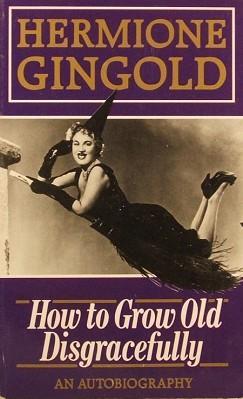
In her book “How to Grow Old Disgracefully”, the actress Hermione Gingold remarked: “There’s nothing so ageing as the past – especially when it catches up with you. I like to live in the present”. How gay was Hermione? Well for starters her sister Angela Baddeley played iconic Mrs Bridges in the 70’s TV drama Upstairs Downstairs (? ask yer mum), Hermoine sang Sondheim on Broadway in A Little Night Music and if that wasn’t camp enough, she also found herself a lover when she was age 84. He was 21.

She called him Little Big Boy and said it was the best relationship in all her life. She continued, “He moved into my apartment and we lived together for five happy years, which was longer than I lived with either of my husbands. In many ways, we were perfectly suited. In spite of the age difference, we enjoyed the same things, he was independently wealthy, and we made each other laugh. We had a marvelous sex life too. Although I must confess that after I turned 85, I found sex wasn’t as important to me as it had been when I was 80″. She wrote, “This confession surprises even me, because up till then, I had always been a sex maniac”. Gay man trapped in a female body?

LIVING IN THE PRESENT is the key to harmonious living, at any age, and a perfect antidote to fear based projection. Plan ahead but don’t live in it. Because what you focus on expands, it’s best if you focus only on the footwork, not the destination. In my view; goals trainings, resolutions are only visions if you are not interested in the journey and it’s the journey that provides the lessons, intrigue and growth. I found that my own solution to ageing resided with where I had come from, and where I was going and in order to look at one I needed to discover the other. Approaching 50 I began to travel extensively and found that I had nothing in common with the hetero ” Young At Heart ” Saga type packages overflowing with couples who didn’t speak to each other, other than when they were flashing pics of grandchildren before my eyes. I thought at the time – is that all they live for? So once again in my life I didn’t fit in, but then again this is my key to ageing – don’t fit in to ageist philosophy.

There is a validated heterosexual vision of growing older, although this is changing rapidly with divorce figures between 50 & 60 the highest in any age band. Gayers have an open field with hardly any child dependent responsibilities but no clear vision of what the alternative is, we are experimenting, not quite as boldly as Hermoine did but quite close. So in order to look forward, I looked back to gay history for the answer. I picked up Rictor Norton’s Mother Clapps Molly House in ‘93 at a time of chronic homophobia, a long term Conservative government still hell bent on Clause 28 and no solution for AIDS. No one thought we would reach old age but here we are living la vida loca.

By connecting to the past, the present became validated including political struggle and it’s solutions. My story will become someone else’s intrigue. In order to eradicate the fear of ageing I needed to connect with older gayers and their own personal history plus examining at close hand what being older meant. A few streets away from where I live is a senior gay of 84 and unlike Hermoine he has SEVERAL lovers, and all without using the internet, cruising grounds or cottages. He is like a man magnet. He has a vitality and sprint in his step that knocks out the vision of faded gayers living alone with the gas fire on. He is my hero. He knocks on my door sometimes with a bag of porn DVDs or VHS Tapes in case “I could use them” LOL.

I suggest that you find a gay dad/grandad to nurture, learn from, and eradicate the fear of ageing. When I have delivered lectures on Gay Ageing to Seniors I always say “drop the notion of sex with young guys within this context”. There are plenty of sites for young/mature, for those that seek it, sometimes we are our own worst enemy when it comes to uninvited attention – the old queen touch-up. With the rise of Daddies on-scene in Barcode or XXL, a valuable resource lies untapped in your own neighbourhood. Find out like I did about Gay History and where you play your role in it.

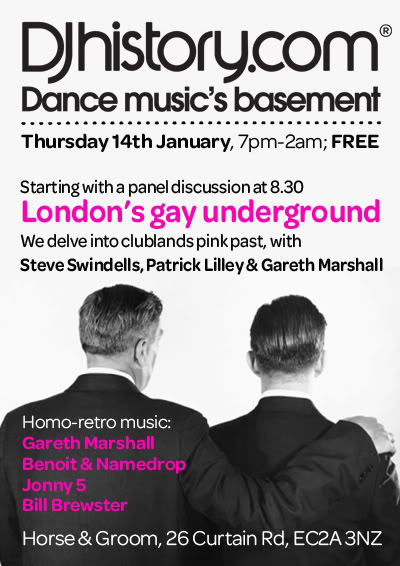
Last year upstairs at The Horse & Groom, Shoreditch I was invited by djhistory.com to contribute (as Marmite Madge) to a discussion panel on Gay Clubland 1960’s – 1980’s with Gareth Marshall, Patrick Lilley & Steve Swindells, compered by Bill Brewster. The room was jam packed with a majority of under 30 indie twinks transfixed by our memories for an hour and a quarter with hardly anyone moving to the bar. The olds were in command.

So there you have it, we are not all pissing ourselves waiting for meals on wheels, some of us are still connected to the creative energy of clubland, fashion and diversity. Can you imagine getting old? Well, find a role model and realise that one day the young will be asking you “at what age do you stop having sex?”. Print this out and hand it to them or better than that – share your own experience – I promise you there is a waiting hunger.

http://www.djhistory.com/

Queer Ageing

Back in the days of ’50/60’s homo criminalisation they used to sing ” Nobody loves a Fairy when she’s Forty ” but now the internet is awash with Daddies, Bears and Spanking GrandDads – thankfully nobody needs to look like Cher anymore to still be in the game.

A report came out in 2010 about the upward trend of older users of recreational drugs suggesting on evidence that people over fifty just ain’t gonna give it up for health concerns or abstain which is why the government stance on harm reduction is one of last resort. We also know that many gayers well over 40 sit at home on Gaydar with tina or chemical friends for companion. One wonders when Addison Lee will get a STONEWALL Award for services to the community, delivering all that gear, but the majority of older gayers just wanna have fun or the fun to continue sanely.

However, myths and negative stereotypes concerning older gayers still exist but the old chestnut of being depressed, isolated, desperate, sexless and predatory is fading fast. We have the internet to thank for that. Most research confirms that growing older as gay or str8 is not much different, embracing or ignoring life changes, but noting that any person who hasn’t adjusted well to other aspects of life won’t adjust well to ageing either. I think that by nature of the beast, gayers are better prepared for ageing having lived independently, are in the habit of socialising with many more different strands of society and are not dependent on grandchildren in later years to provide distraction from retirement. Being lonely in old age was always the fear thrust upon us by society when in reality it is older str8s that now realise that access to grandchildren are not a given anymore, with family break-ups, divorce and low marriage statistics in the mix.

In 1978 Bell & Weinberg ( Homosexualities : A Study of Diversity Among Men and Women ) found that lesbians and gay men were more likely to have a network of close friends than heterosexuals. They postulate that heterosexuals are more likely to be involved in family interactions as opposed to outside friendships. Integration into a homosexual community is an important factor in the adaptation of older male homosexuals, as the community of friendships is important to the gay and lesbian throughout the lifespan, it continues, they are not dependent on family for their emotional support and needs. This is important for several reasons. First, gays and lesbians are much less likely to experience an ” empty nest syndrome” as support already comes from outside the home. Second, the community affords older gays and lesbians the opportunity to meet new people and socialise. As the homosexual community is usually noted for its diversity, older individuals have the opportunity to socialise with a wide range of individuals, young and old. In addition, work relations usually do not make up the majority of personal contacts outside the home, thus, upon retirement, the network of friends remains relatively unchanged. The establishment of friendship networks appears to make the ageing process EASIER for gays and lesbians”.

Now if this was the conclusion in 1978, before Gay Pride, before the reduction in Age of Consent, before the Internet and before Elton came out, post marriage as a gayer, then we are streets ahead in senior age management in the new century. Civil Partnership will not have much effect on ageing, except that men no longer need to stay in a dysfunctional relationship to avoid loneliness in later years. The rush in the first year of being able to ” marry ” was mostly existing long term relationships in mature years already. Thankfully, couples will chose to marry for reasons, other than fear of ageing. Middle age gayers now have other options, not so widely available in 1978, worshiping the post-clubbing Gay Holy Trinity – Travel, Therapy & Interior Design to fill those autumn years.

When AIDS took the Daddies away in the 80’s/90’s, an emotional wound remained until time took it’s course after combo’s in 1996. Rarely then did young gay men freely admit they fancied Dads, hairy bodies or leadership in direction, yet it was obvious that once the fad for smooth bods lessened and gay men shopped around a bit on fetish sites or XTube, older suddenly became wiser. Now the rise of big muscle bears, silverdaddies.com and even mature escorts prove that the hunger for wisdom is being satisfied. Not all guys want a hot bod, many just want to be held in silence by older hands. But it is our minds and thought patterns that remain the biggest enemy, when projecting fear with procrastination on greying hair, if any remains of course. On asking a client whether he had many older friends he replied ” I don’t know anyone gay over 35 because I don’t sleep with anyone over 35 “.

So there you have it, and I doubt whether he is the only one.

The Love Drug

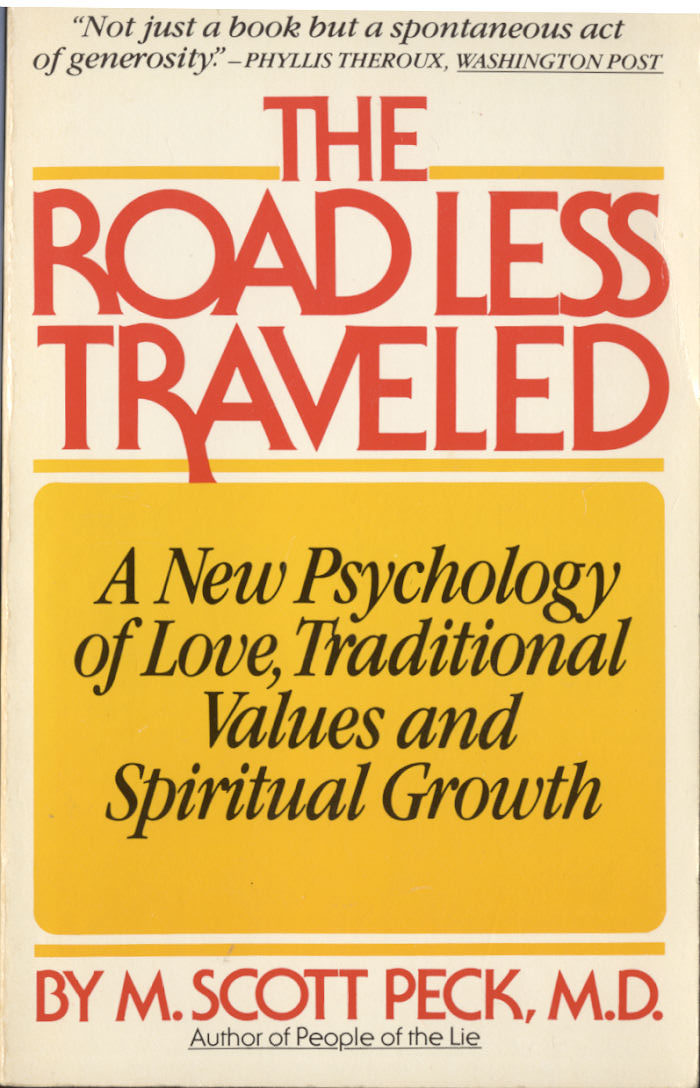
Being exposed to self-help books in the early eighties saved my arse. I was hungry for results dealing with an incurable disease, liver damage and the many consequences of my past behaviours. Along came a new language, words like ” dysfunctional ” ” co-dependent ” and ” inner child ” which asked more questions than they answered. One of the major tomes that became part of the regime I call ” Airport Spirituality ” was Scott Pecks 1978 trailblazer – THE ROAD LESS TRAVELLED.
_______________________________
Airport Spirituality is what I call dip in, dip out, working on yourself, as if snatching a spiritual best seller leaving Gatwick, to read on a Greek beach in 40 degrees is the answer to the reason why you ” need to get away ” in the first place. It isn’t.
If you need to ” get away ” the best idea is often to stay put and work through it. Peck’s book challenged many ideas that people hold around the illusion of LOVE and the time spent leeching rather than loving. Whatever is unhealed we bring to the table and that platform of desire is riddled with remembered LACK than remembered MORE THAN I NEED – Abundance. If you felt you were dysfunctionally parented, then you will create the same kind of relationships as an adult.
_______________________________
Peck writes,
” I define dependency as the inability to experience wholeness or to function adequately without the certainty that one is being actively cared for by another. We all – each and every one of us – even if we try to pretend to others and to ourselves that we don’t – have dependency needs and feelings. All of us have desires to be babied, to be nurtured without effort on our parts, to be cared for by persons stronger than us who have our interests at heart. No matter how strong we are, no matter how caring and responsible and adult, if we look clearly into ourselves we will find the wish to be taken care of for a change. But for most of us these desires or feelings DO NOT RULE OUR LIVES. When they do rule our lives and dictate the quality of our existence, then we have something more than just dependency needs or feelings, we are dependent.
Specifically, one whose life is ruled and dictated by dependency needs suffers from a psychiatric disorder to which we ascribe the diagnostic name ” passive dependent personality disorder “. It is perhaps the most common of all psychiatric disorders. People with this disorder, passive dependent people, are so busy seeking to be loved that they have no energy left to LOVE. They never feel ” fulfilled ” or have a sense of completeness. They always feel ” a part of me is missing “. They tolerate loneliness very poorly. Because of their lack of wholeness they have no real sense of identity, and they define themselves by their relationships, who they know and often live through other peoples lives “.

A decade after Peck described ” a passive dependent personality disorder ” the personal development industry called it CODEPENDENCY, with Pecks illustration being just one symptom of ” the disease of NEVER ENOUGH”, that lay at the core of all addictions. Never enough LOVE, MONEY, Drugs, ALCOHOL, Food and yes, even SELF HELP BOOKS. The affirmation ” I AM enough, I DO enough, MY PRESENCE is enough . . .  is an instant pacifier for recovering Codependents, so stick that dummy in your mouth whenever a LACK feeling arises. Since many codependents think they gain LOVE through DOING, or gaining approval OUTSIDE of themselves . . . love, like charity begins at home, so check out the vision of love revealed in your early childhood years and work forward. If you are expecting to be parented by your partner, or you babysit them already in the name of LOVE, it may be time for that Greek holiday after all – but on separate Islands – just to find out who you are.